We had to be early today as we had a breakfast rendezvous at the Toby Carvery near Sutton Park. We were meeting some like-minded souls to discuss geocaching. This get together was to be an official Geocaching Event which can be logged like any other type of cache.

As is usual at this type of event, there are some well known faces but often new faces and it’s great to put faces to the names we’ve seen on posts or in logs.
The main event, breakfast, was alright (not as good as Wetherspoons) but you do have the option of a Yorkshire Pudding !
Post event, we drove out to and parking in Brownhills for a spot of AdLabing (is there such a word?).
Whilst walking around town, we came upon a disused railway and checking the geocaching app discovered that there was a cache nearby. It was a puzzle cache where a conundrum has to be resolved to reveal the true co-ordinates of the cache.
In this instance this was the clue (changed slightly) …
The cache can be found at:
North Green Red Orange Grey. Red Grey Orange
West Black Black Brown Green Green. Green Yellow White
The cache is called Resistance is Futile – so there’s a hint.
We solved th puzzle but the final co-ordinates where not that close and we had others to do – we shall return.
We finished off our brief visit to Brownhills with a walk along the Wyrley and Essington Canal (locally called the Curly Wyrley because of all the twists it makes contouring through the landscape).
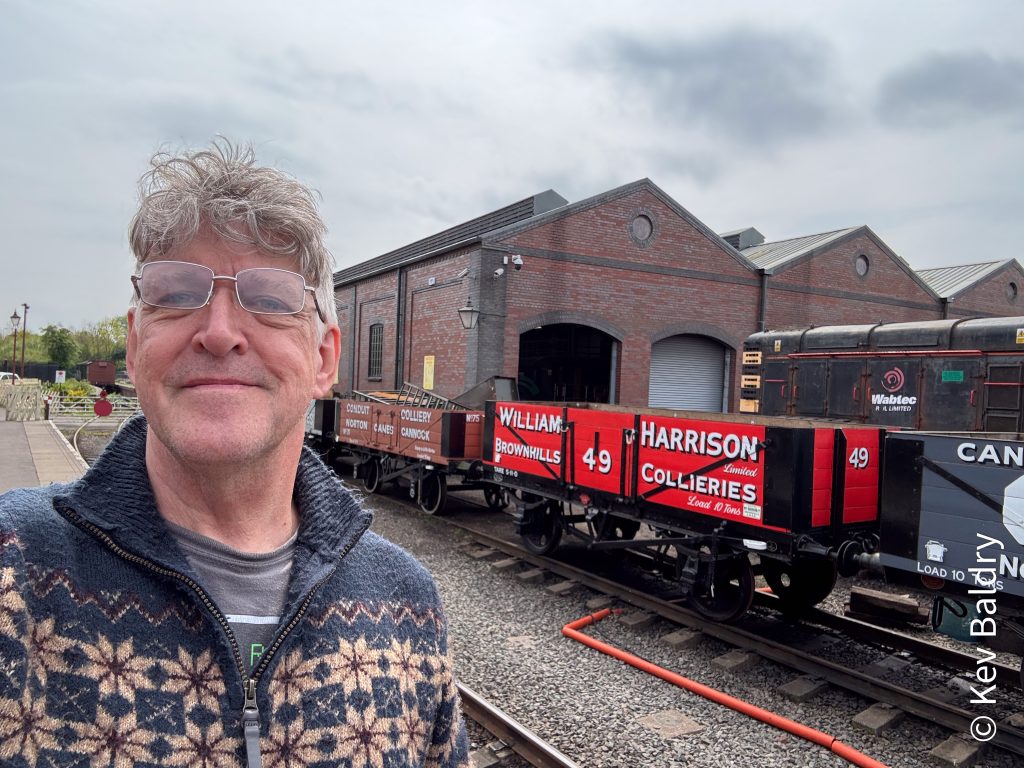
From here we made our way, just up the road, to The Chasewater Railway.
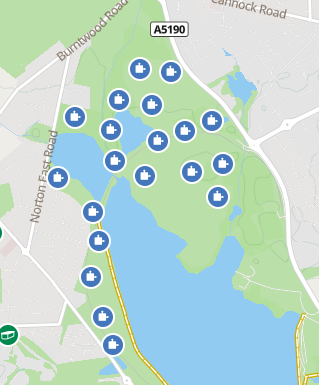
Checking the geocaching website before leaving home, I noticed a number of puzzle caches on Chasewater but didn’t have time to solve all of them beforehand. I have now (see map) but it involved a late night.
Train Ride
On the way to the trains, we diverted to the back of Norton Canes service station which was near enough to quickly do an AdLab based on the Mr. Men series of books.
At the station, we parked up (not too busy) and made our way to the booking office – which was closed.
Nipping into the adjacent shop, I asked, firstly, if the trains were running. I was told that they were.
“The ticket office is closed” I explained.
“That’s cuz I’m in ‘ere” stated a woman who had been chatting with the shop keeper, “but you can buy a ticket off Alan here”, she continued.
“One adult and one old fart?” I asked.
“I’m not sure we’ve got old fart tickets”, Alan replied with a smile.
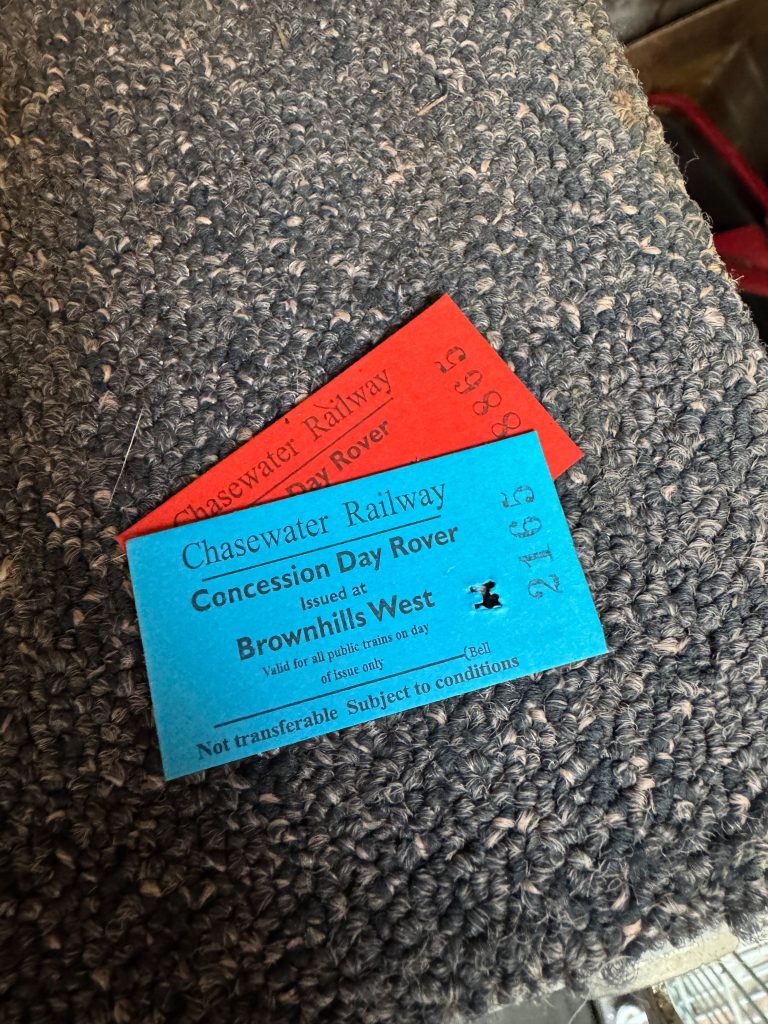
“One concession and one adult”, Alan said handing over a couple of tickets, “the adult must be for you? You don’t look old enough for the old fart!”
I like Alan.
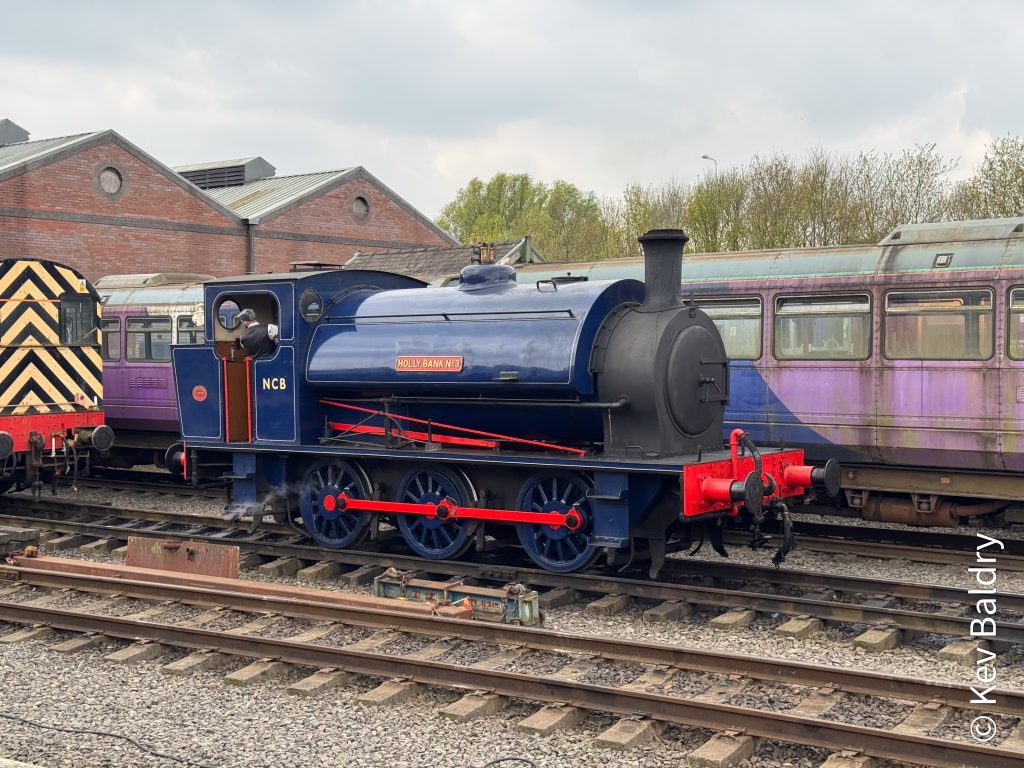
The plan was to ride that train to the end then stop off at one of the intermediary stations (Norton Lakeside Halt) find the two puzzle caches that I had solved before getting the next train through.
However, on the way out, the train failed to stop at the halt. I asked the guard why the train hadn’t stopped.
“Oh, it’s gala day”, he explained. Quiet for a gala we thought.
We rode the train to the far station at Chasetown before heading back. It didn’t take to long as the track is under two miles in length.
Passing through Chasewater Heaths station we spotted a Pacer DMU parked up. “Is the Pacer running today?” I enquired off the guard. “Should be, but the timetable’s all over the place!”
Back at our starting place (Brownhills West) we took a break for refreshments in The Sidings Cafe as we waited for the Pacer.
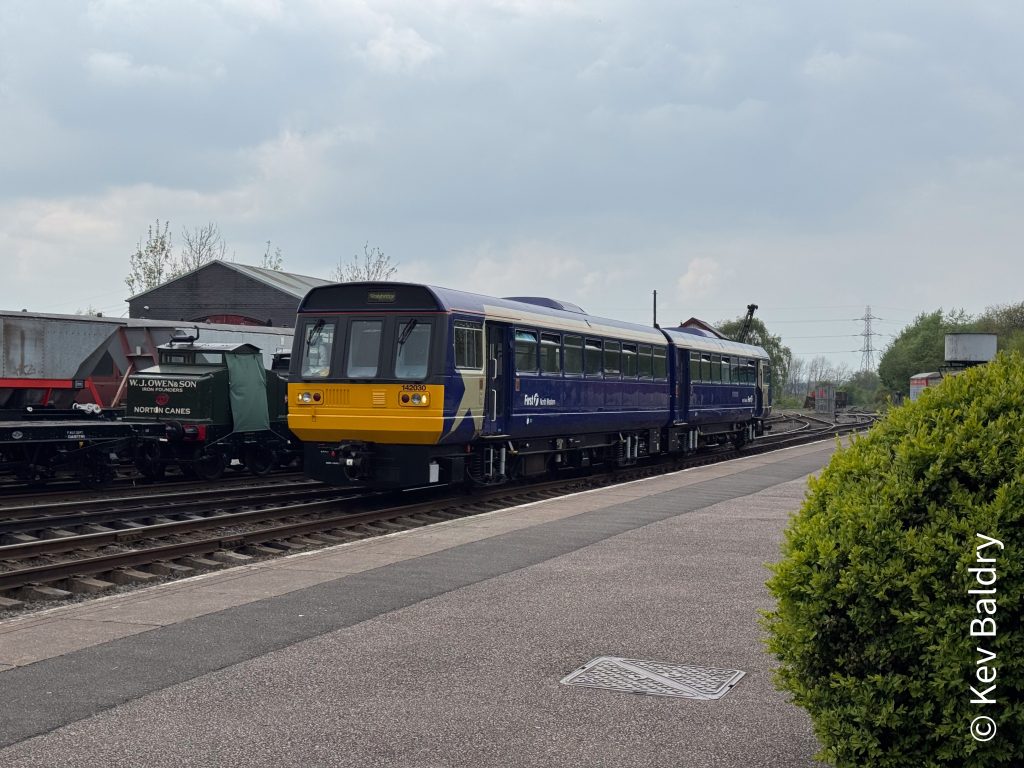
After much shuffling of rolling stock, the Pacer finally pulled onto the end of the platform and on we got.
I have never ridden on a Pacer and as expected was ‘treated’ to a rather bumpy trip even at twenty five miles per hour. It must have been fun at mainline speeds of up to seventy !
In fact it was so bad that, in later years, the Pacers were limited to sixty.
Pacer trains were railbuses built by British Rail between 1980 and 1987. They were diesel multiple unittrains, meaning each carriage had its own diesel engine. Pacers were built as a stopgap because British Rail did not have enough normal trains at the time and could not get new ones quickly enough. They were not supposed to be used for more than 20 years, but it actually took nearly 35 years to replace them.
Pacer units use a lightweight modified bus body and other things from buses, such as the seats,
and an underframe with just four wheels for the entire unit, instead of the usual two four-wheeled bogies (making eight wheels) that you would expect on trains. This made for a noisy and bumpy ride. It also causes more wear to the wheels and track on tight curves.
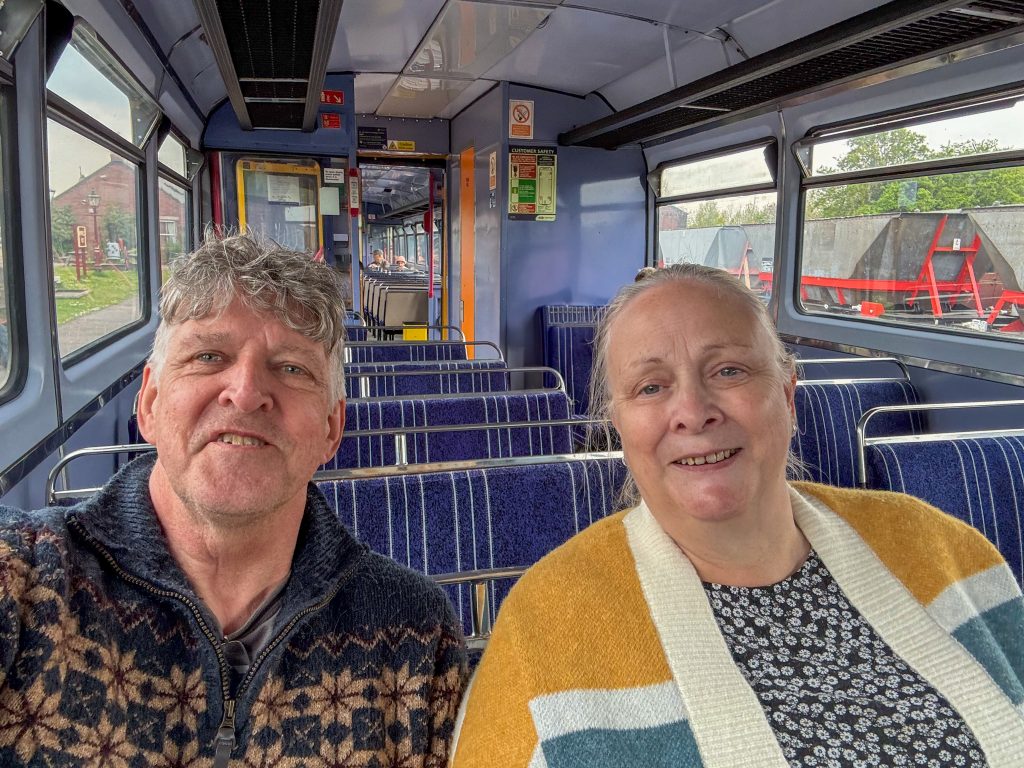
After our Pacer ride, concerned that the dogs had been left at home since before nine this morning, we made our way home.
I had a scheduled training ride to do on the turbo (see below) which was followed by a dunk in the tub, dinner and a spot of TV. I then spent a couple of hours on the Chasewater puzzle caches before retiring in the wee hours.
Training Ride
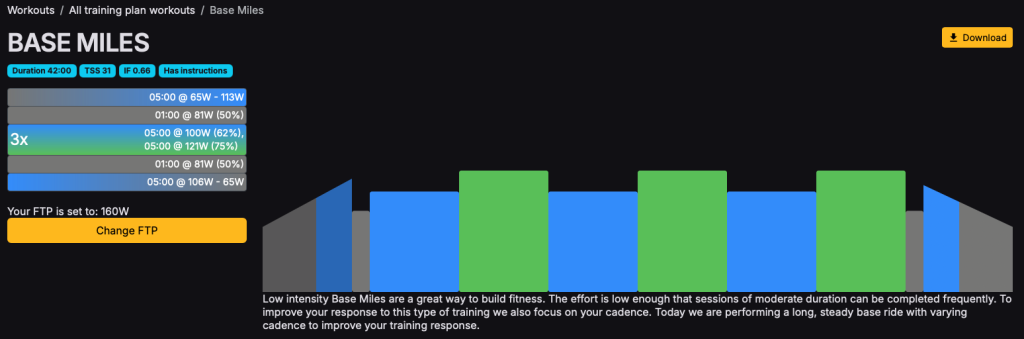
Instead of the usual free ride, I am starting a training plan and today’s exercise is detailed above.
After a warm up, I had to ride three sets of riding at 100W for five minutes followed by 121W for the same time.
To help with this, the app uses ERG mode is I don’t have to bother with changing gears – just get my head down and get on with it.
It took a while to realise this as I was unable to change my virtual gearing with the buttons.
This was an introduction to structured training and I needed to keep peddling for the full forty minutes but I managed.
The next workout I planned for Monday.
ERG mode is a setting in training platforms such as MyWHoosh that fixes your power output by automatically adjusting your resistance to match your cadence.
Power is a calculation of torque (how hard you’re pressing on the pedals) multiplied by cadence (how fast they are turning). ERG mode uses the two in tandem to ensure you hit the prescribed power output.
As an example, if a workout requires you to hold 100 watts, the resistance will automatically increase if your cadence drops, or decrease if your cadence increases, in order to keep you at 100 watts.